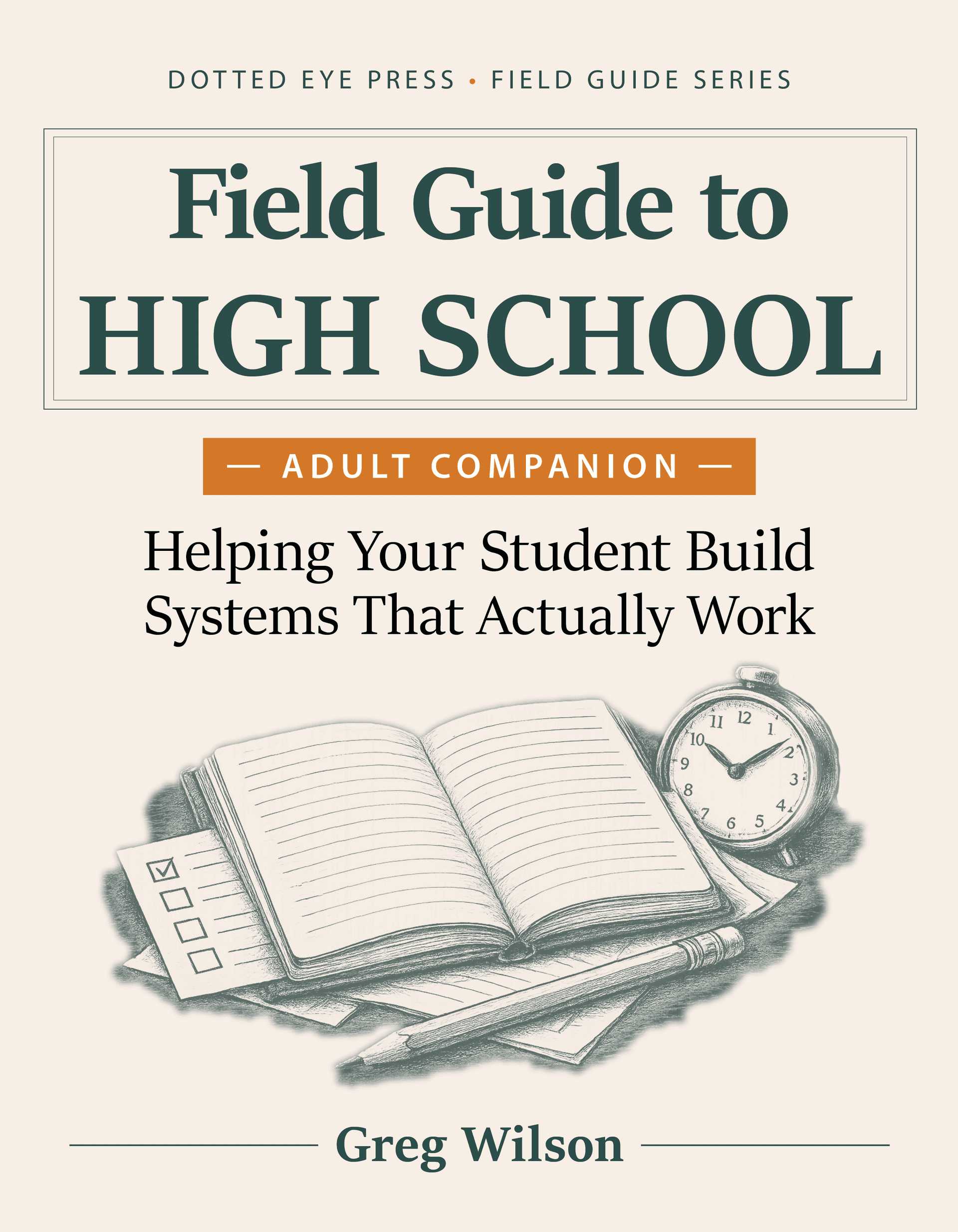
The Adult Companion
Your job is smaller than you think. This is what it actually is.
The Companion runs alongside the eight weeks your student is working through. It explains what they are building, why this week matters, and gives you the language for the moments where you would otherwise step in and take over.
The student book is the program. The Companion is how you support it without getting in the way.
The Field Guide is written to the student. They can run it on their own. By the end of Week 1 you will see this. The exercises are theirs, the writing in the book is theirs, the small adjustments they are making to their morning are theirs.
That is the moment the choice arrives. Step in and start coaching, managing, reminding, copiloting. Or stay back and let them run it. Most of us were not taught what the second version looks like. The Companion is that book. Six parts, written to be read alongside the eight weeks, with the language for the conversations that come up and the restraint required for the ones that do not.
Two audiences. One book.
The Companion is written for two readers at once: the parent at home, and the educator, counselor, or clinician using the program in their setting. The cognitive science is the same. The week-by-week structure is the same. What changes is where you sit in the student's day. The book is built for both seats and is explicit about which guidance applies where.
Tuesday of Week 4.
A student gets hit with three sets of instructions in one afternoon. The English teacher is still talking as the student backs out the door, calling out a chapter, three annotations, a vocab worksheet, and an emailed thesis due tonight. The coach catches them in the hallway with a four-part practice sequence. Someone at home adds a fourth list when they walk in. They do what Week 1 taught them. They write everything down.
Then they look at the page. Fifteen items. No priority. No sequence.
Practitioners recognize this moment. Externalization without structure is the wall a lot of student work hits, and it is the moment a lot of programs do not have a next move for. Week 4 is the next move. The Companion gives the adult the language for it, and for the seven weeks around it.
What the Companion contains
Six parts, in order.
- Part I
What This Program Is Actually Doing
What executive function is. Why it’s a skills gap, not a character flaw. How the 8-week daily structure works and why it’s sequenced the way it is.
- Part II
The Adult Role: Support Without Takeover
Why everything you’ve already tried hasn’t worked. The difference between coaching, managing, and witnessing. How to hold accountable without initiating. When to resist the urge to rescue.
- Part III
Rules of Engagement
How to verify without taking over. Distinguishing productive struggle from system breakdown. Adjusting support levels without taking ownership. When to pause the program.
- Part IV
The Eight Weeks Ahead
The cognitive science behind the program’s design. The six EF domains. Why 8 weeks, why daily, why this sequence. What to expect at each stage, including the uneven progress that is normal.
- Part V
Weekly and Daily Companion
Week-by-week guide for the adult: what the student is learning, what artifacts to look for, what verification looks like, what non-engagement signals, and what to do when they’re going through the motions.
- Part VI
What Comes Next
What you both built. What the program didn’t teach. What happens after Week 8.
Plus a Preface, a Note from the Author, a Note on Group and Classroom Use, a Quick Reference Guide, a Tool and Process Glossary, and Suggested Further Reading.

Working together
How the Companion fits.
The Companion is not a parallel curriculum and not a workbook. The student runs the Field Guide. You read the Companion alongside. There is nothing for you to assign, grade, or check.
Your job is to know what the student is building, hold the language for the moments that come up, and stay out of the work itself. That is the integration. The Companion is what makes that role possible to do well.
AVAILABLE IN
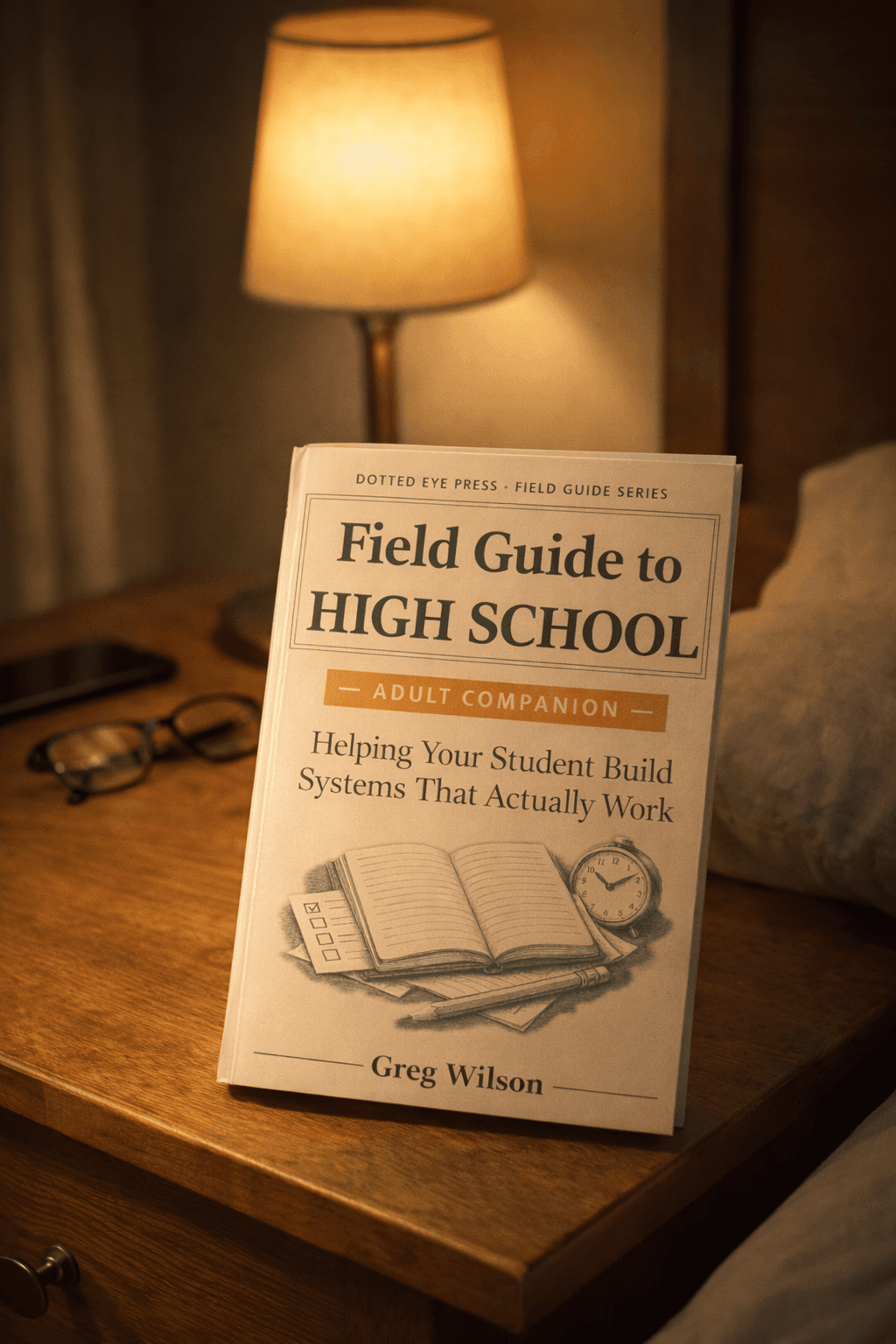
- Paperbackdesigned to live on the kitchen counter or the office shelf
- Ebookfor adults reading on a tablet or phone
Field Guide to High School - Adult Companion
The adult half of the program
Paperback $19.99 · Ebook $9.99
Looking for the student book? See the Field Guide →