The Field Guide Series
Intelligence does not come with an operating system.
High school expects planning, organization, time management, and follow-through from day one. Almost no one teaches these skills. Two books. One complete program. The student book is the system. The Companion is how you support it.

The Program
An eight-week program, run one day at a time.
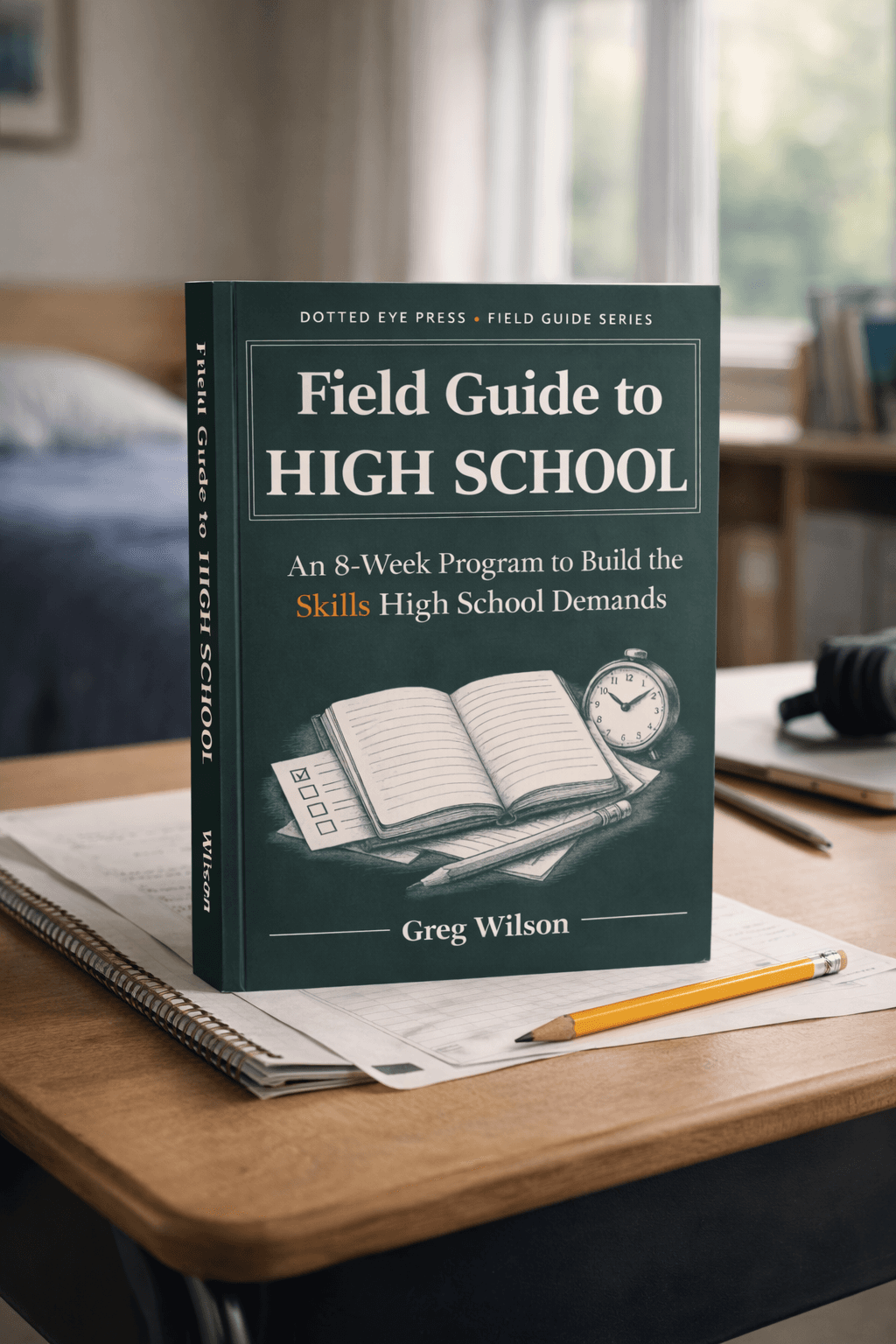
Field Guide to High School is a structured executive function skills program for students making the move from middle school to high school. It runs eight weeks. It moves one day at a time. The student opens the book, reads that day's lesson, and does that day's exercise. Each session is short enough to fit on a school night and concrete enough to leave behind something the student can use the next morning.
The program is designed for the move into 9th grade, the window where middle school's external scaffolding gets removed and high school's assumptions take over. It works earlier, it works later, but the 8th-to-9th grade transition is the design target.
The structure is deliberate. Skills build on each other. Week 1 is awareness and current state. Weeks 2 through 6 build the working systems for planning, time, tasks, study, and self-monitoring. Weeks 7 and 8 turn the practice into something portable.
By the last day, the student has a complete operating system they built themselves. Not a printout. Not a method imposed from outside. A working set of habits and tools that fits the way their own brain runs.
The System
The student runs the program. The adult reads alongside.
The skills the student is learning are theirs. The work has to be theirs too. If an adult does the work for them, the system never becomes the student's system, and the moment the adult steps back, it falls apart.
But adults still want to help, and there is a real version of helping. Knowing what the student is working on this week. Knowing why the exercise looks unimpressive on the page but is doing structural work underneath. Knowing what to say when the student stalls on Tuesday and what not to say when they skip Thursday.
That is what the Adult Companion is for. It is not a parallel curriculum. It is the context layer. It tells the adult what the student is building, why the order matters, and what their actual job is, which is usually smaller and more specific than they think.
Two books. One program. The student does the work. The adult reads the Companion and learns how to support it without taking over.
Audience
Designed for the 8th-to-9th grade transition. Useful well beyond it.
The student book is written directly to students making that move, in a voice that respects them. It assumes nothing about prior systems. It works for the bright disorganized kid, the anxious overachiever, the kid who has never been shown how, the neurodiverse student for whom willpower-based advice has already failed, the student carrying real outside demands, and the student working in English as a second language.
The Companion is written to two adult readers in one voice. Parents and caregivers who want to help without making it worse. Educators, school counselors, learning specialists, and clinicians who want a structured program they can put in a student's hands and a context layer that explains what the student is doing across the eight weeks.
Both books work in three settings: at home one-on-one, in a classroom or advisory period, and in a clinical or specialist setting where the student is working through it with support.
How to use it
What this looks like in practice.
A complete adoption is straightforward. The student reads the Field Guide one day at a time and does that day's "Your Turn" exercise. The adult reads the Companion section that maps to the week the student is on, so they know what is being built and what the friction points usually look like.
The student does not need to be reminded daily. The Companion explains the difference between supportive structure and over-involvement, and gives the adult the language for the moments that come up. Missed days. Resistance. The week where it feels like nothing is working. Those are predictable. The Companion names them in advance.
Eight weeks later, the student owns a system. The adult has watched them build it. Both have the vocabulary to keep it running through the school years that follow.
For students heading into high school
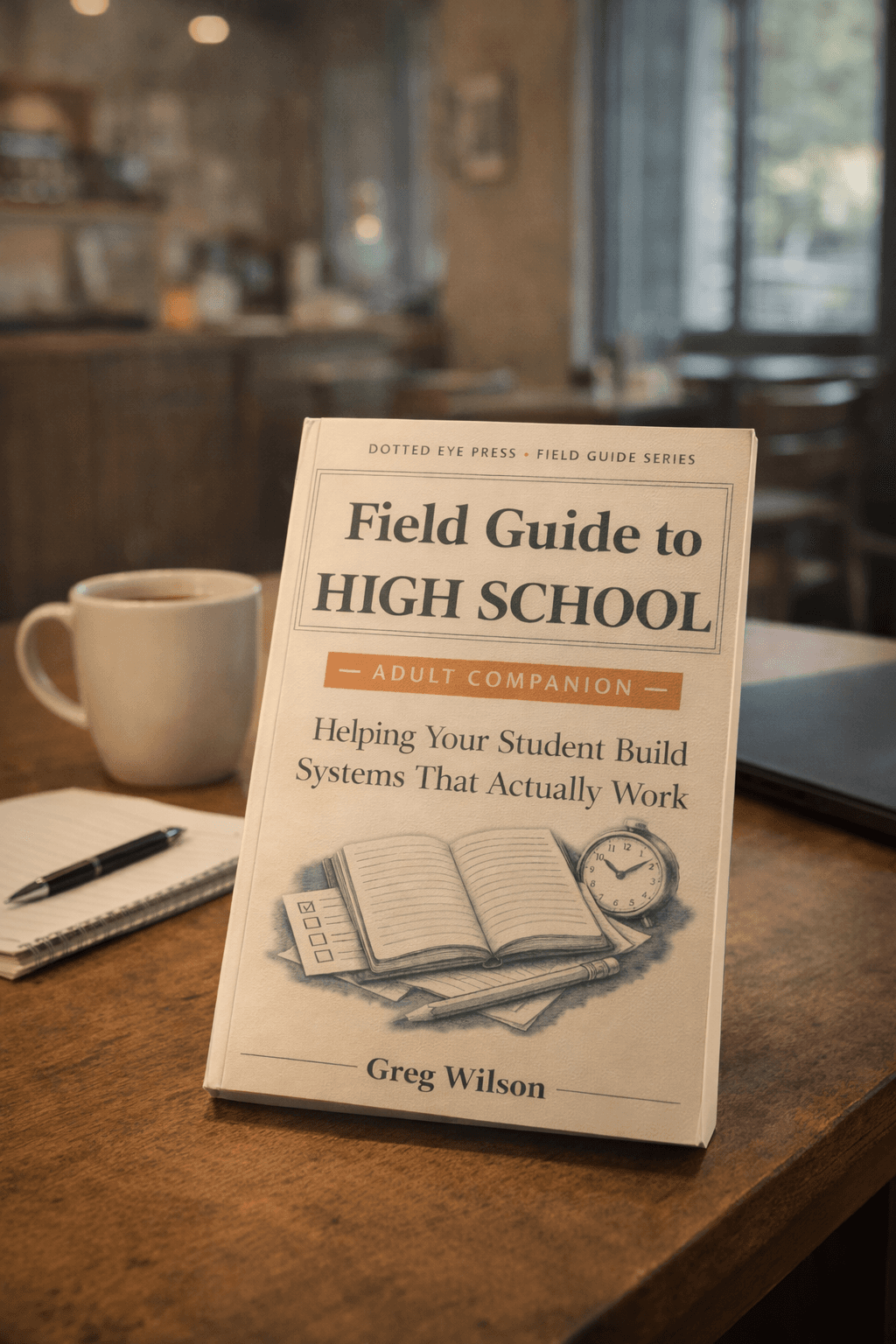
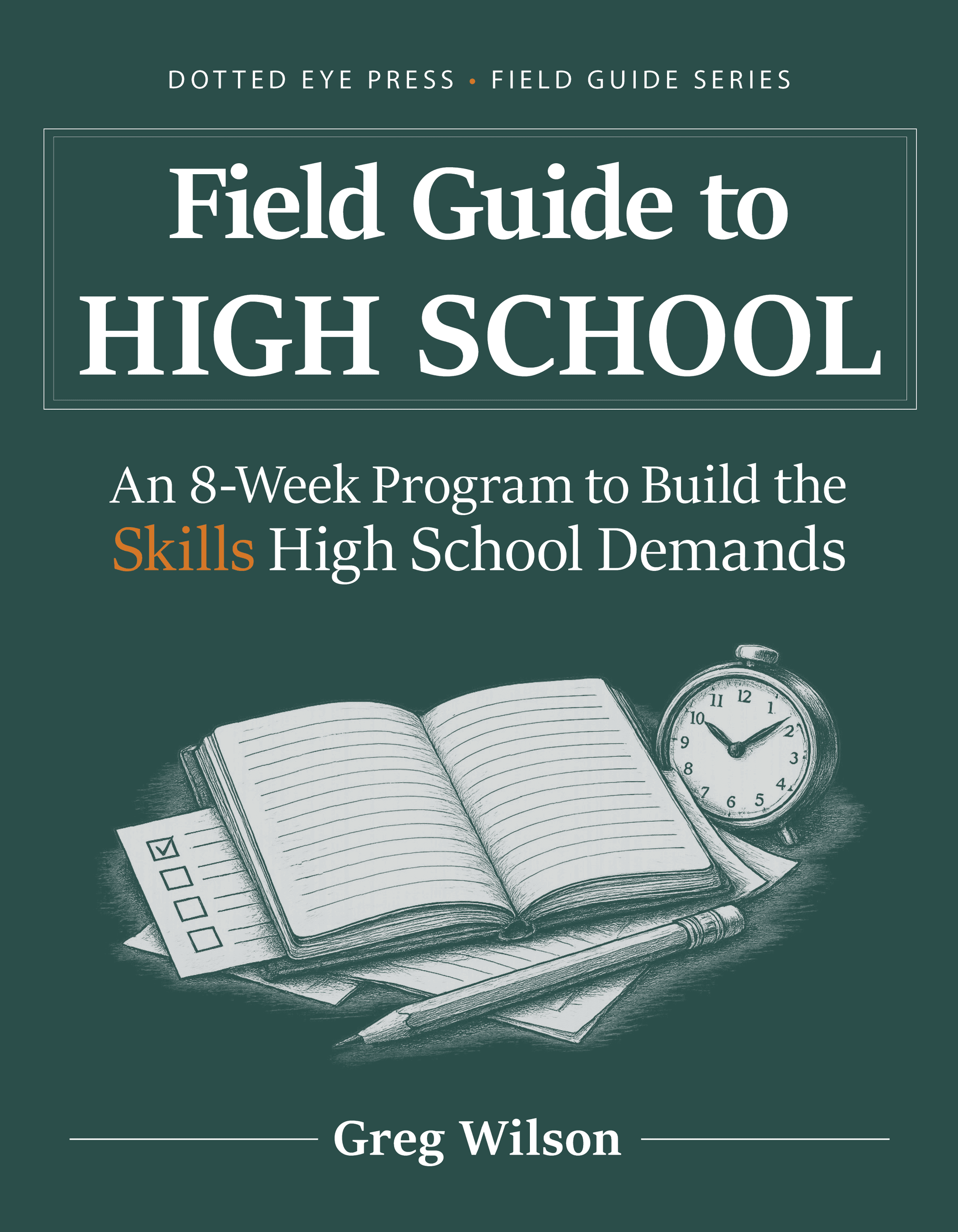
Field Guide to High School
The eight-week program. Written directly to the student in a voice that does not waste their time. Each day: one lesson, one exercise, no filler. By the end, they own the system.
For families, educators, and clinicians
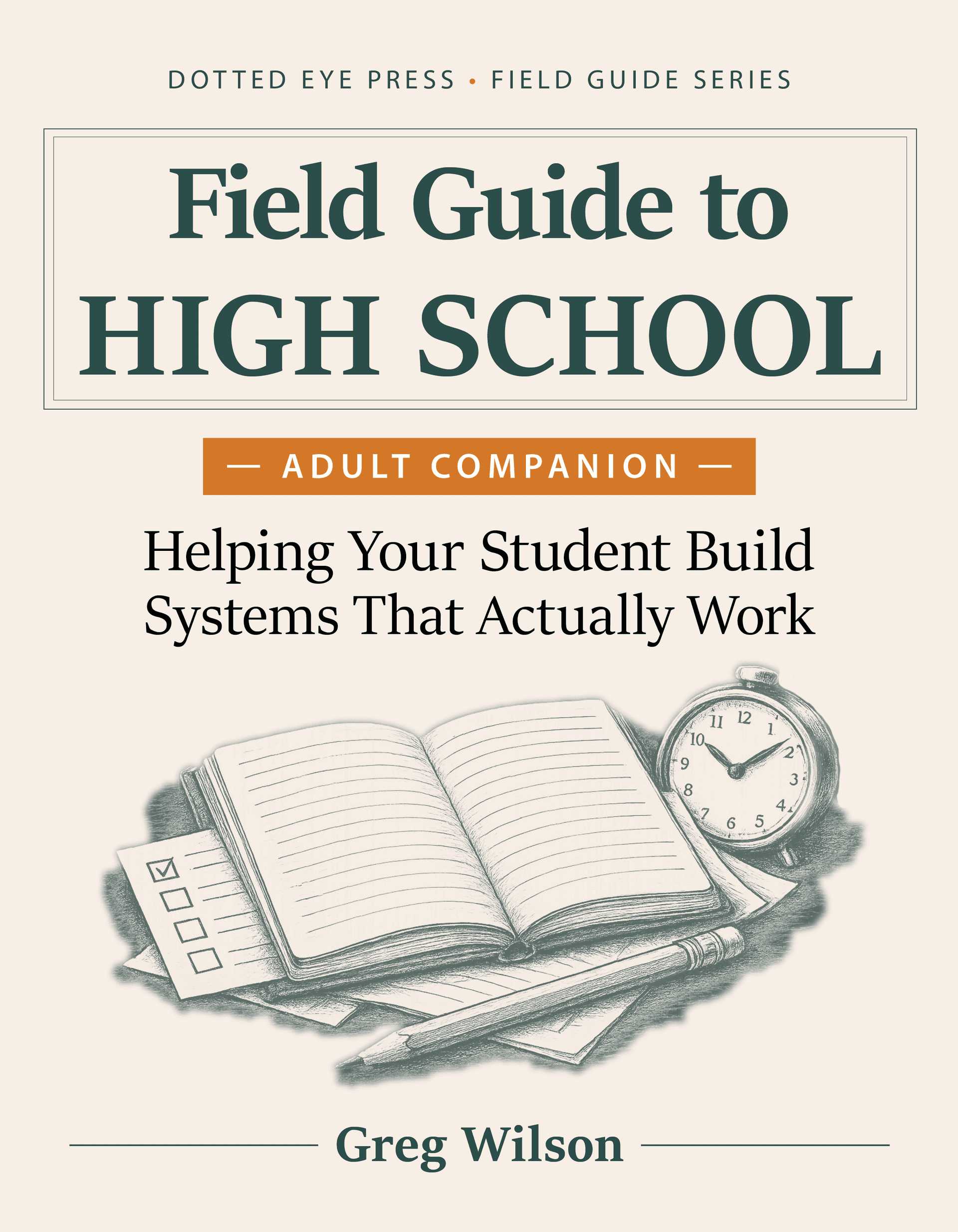
Field Guide to High School - Adult Companion
The context layer. Week-by-week visibility into what the student is building, language for the friction points, and a clear framework for supporting without taking over.